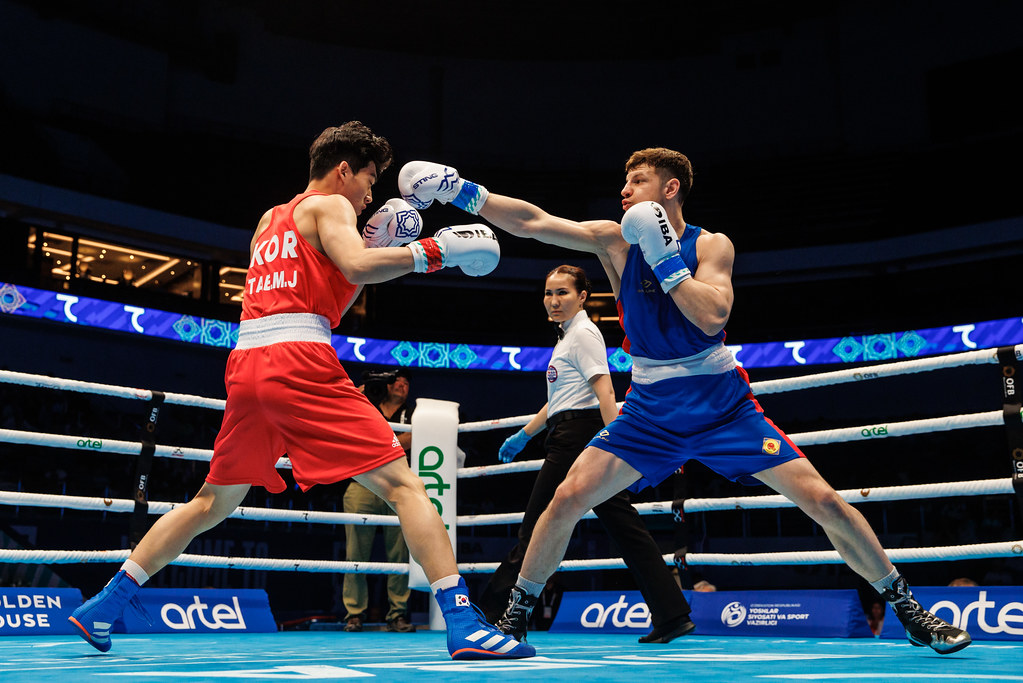
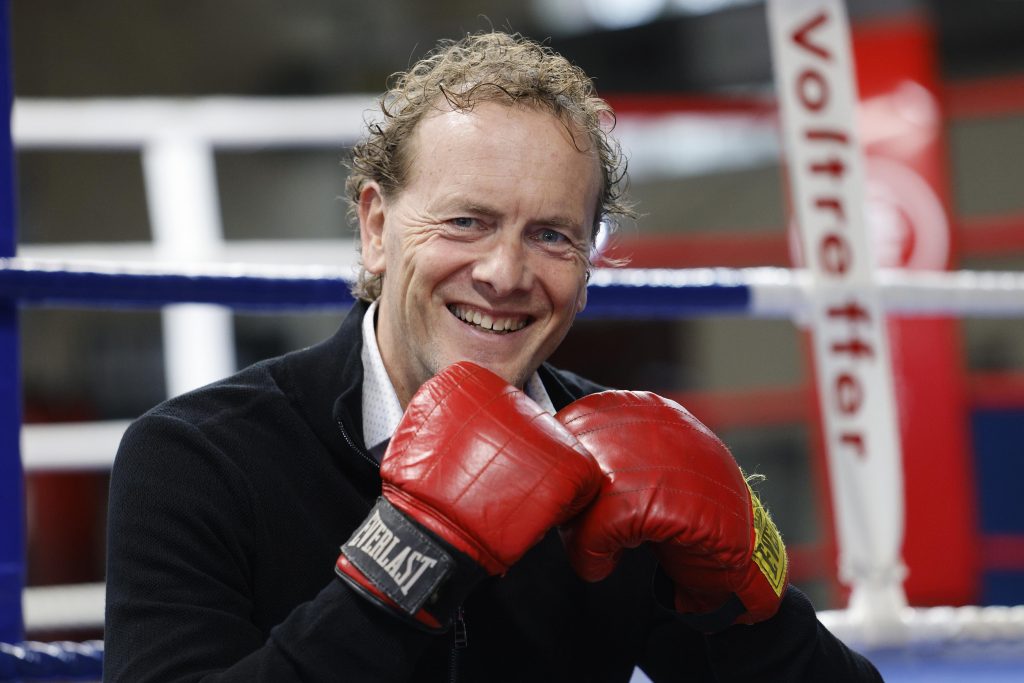
The future of boxing at the Olympics appears on the ropes and despite the sport’s leaders facing challenges, optimism remains high at the IBA Men’s World Championships in Tashkent, Uzbekistan. Bouts have been underway this week, medal rounds are May 14.
Gold medals and $200,000 USD will be awarded to champions across 13 weight divisions with a total prize purse of $5.2 million. More than 530 boxers representing 107 countries have stepped into the ring at the Humo Arena in the Uzbek capital. Seven defending world champions are in the 2023 world championship field.
More than 500 boxers are competing in Tashkent.
Leaders of the International Boxing Association say the large turnout of boxers in Tashkent for the tournament shows the strength of the federation, despite its suspension by the IOC as the IF representing boxing at the Olympics.
The IBA was suspended in 2019 over finance, governance and refereeing/judging issues. Since then IBA has adopted governance reforms, engaging Canadian sports ethics consultant Richard McLaren to make recommendations to move forward.
An IOC boxing task force is overseeing the Paris 2024 tournament, as was also the case for Tokyo 2020. The sport – which has been contested at the Olympic Games since 1904 – has provisionally been left off the sport program for Los Angeles 2028.
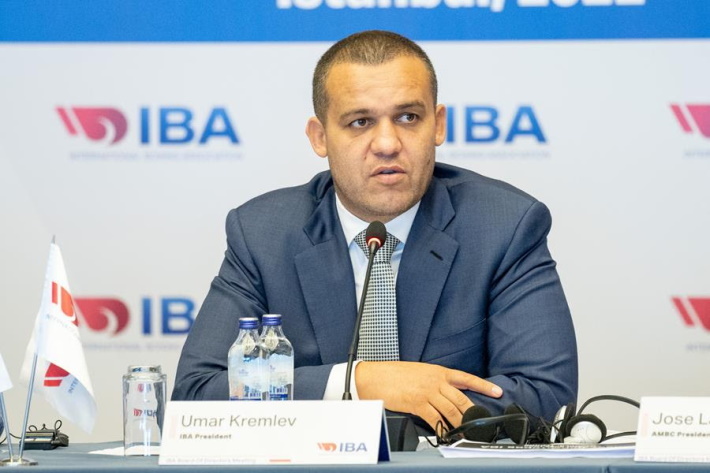
IBA president Umar Kremlev is adamant that the governing body has fulfilled IOC-requested reform criteria. He says IBA deserves to be reinstated.
“We will definitely try to get into the Olympics – I hope that we will reach our goal,” Kremlev said at a news conference in Tashkent at the open of the championships.
IBA President Umar Kremlev.
“The IBA is open and transparent – we will we fight for boxing to be present at all multi-sports events, including the Olympics. We will not let them exclude boxing from the Games. I don’t see any issues to start the cooperation with the IOC, we just have to start.”
IBA secretary general George Yerolimpos noted that a comprehensive report was sent to the IOC proving all the requested governance reforms have been made. The 400-page comprehensive report was delivered, addressing all areas of concern, according to the IBA, on Friday, May 5th.
‘The IBA has sent all the requested responses and documents to the IOC totalling over 400 pages,’ IBA Secretary General and CEO George Yerolimpos said. “We are open to continued dialogue and cooperation for the sake of our core values and duty to protect our athletes, and the sport of boxing itself.
“We hope this helps to ensure a fair evaluation of the IBA and its progress done and will lead to a full reinstatement of the organization in the Olympic movement and production of the boxing events in the lead-up and during Paris 2024,” said the IBA leader.
“I’m sure that we have all conditions that the athletes require,” Kremlev said. “We are all here to serve our athletes and coaches, our National Federations. All parties need to acknowledge the mistakes of the past and never repeat them,” he said.
Kremlev laid blame for boxing’s woes on the failures of the federation’s former president, C.K.Wu, who served from 2006 to 2019.
Kremlev labled as a “rogue organization” the just-announced World Boxing federation which will seek to become the IF recognized by the IOC for boxing. Last month Olympic-level boxing leaders in the United States, Great Britain, the Netherlands, Germany, New Zealand the Philippines and Sweden said they would join forces for the new federation.
USA Boxing – representing the most successful country in the sport’s Olympic history –announced April 26 that it had left the IBA with immediate effect.
Kremlev said that the withdrawal from the IBA to the breakaway world body would hurt US athletes and deprive them of other opportunities.
Kremlev also revealed that he has received four requests from interested parties that would like to step in and represent U.S. boxers as part of the IBA.
The Russian sports leader says he would much prefer to find a way to overcome the conflict affecting Olympic boxing.
“We want to negotiate a resolution and live in peace,” he said.
After 125+ years in the Summer Olympics, boxing seems fated to lose its spot after Paris 2024.
Unless there’s a last-minute rapprochement between IOC President Thomas Bach and Umar Kremlev, president of the estranged International Boxing Association, the full IOC likely will vote in September to drop the sport from Los Angeles 2028 onward.
After years of scandal involving judging at the Olympics as well as management issues within the federation, the IOC may have lost patience with the pace of change at IBA. While changes have been made since the IOC sanctioned the federation in 2019, Bach remains unhappy that Kremlev was elected as IF president last year. The Russian boxing leader prevailed in voting by a two to one margin over Netherlands candidate Boris van der Vorst. Kremlev won support from Africa, Asia and Latin America. The U.S., Great Britain, Canada and European nations backed van der Vorst. Unspoken was the preference of the IOC for the Dutch candidate. The overall election was subject to controversy and appeals.
So the standoff goes, almost a year since Kremlev took charge. For a second time, the IOC – not federation officials — is overseeing qualification for the Paris Olympics. The upcoming world championships in Tashkent in May, as well as the women’s worlds earlier in the year, won’t count toward Olympic standing.
Against that backdrop, the IOC Session in Mumbai this September will get to decide on the 28 sports in the core program of the Summer Olympics from 2028 onward. Boxing is not among them. Also scrambling to remain are weightlifting and modern pentathlon, plagued by their own federation foibles. Standing by to enter the core program are skateboard, sport climbing and surfing.
IBA President Umar Kremlev.
Even the launch of a proposal for a new federation called World Boxing won’t provide any immediate aid. The plans were announced last week. It is led by van der Vorst, joined by allies from national federations including the U.S., Great Britain and France which supported his IBA presidential bid.
A congress to formally organize the new federation won’t happen until November, which will be too late for the IOC Session to consider before it votes.
Other attempts to form new federations to replace existing IFs have not been successful. The last time was some 20 years ago when efforts were made to launch a new IF for volleyball federation FIVB.
Short of an extraordinary bending of rules and regulations, time appears to be simply running out for boxing in 2028.
Boris van der Vorst leads the movement for a new federation for Olympic boxing.
Boxing would then become another among the dozen plus sports vying for one of the additional sports allowed for each host city to select. LA28 is already pondering a field of nine other contenders: cricket, break-dancing, baseball/softball, flag football, karate, kickboxing, lacrosse, squash and motor sport.
There are real-world consequences should boxing lose its spot in the Olympics. Without Olympic recognition, many of the national boxing groups around the globe will lose government funding. Young boxers will no longer be eligible for Olympic Solidarity support, which is vital for athletes in smaller nations.
In Los Angeles and Southern California — a hotbed of boxing with dozens of gyms — a generation of boys and girls will miss the opportunity to use hometown Games as their inspiration if the IOC ends boxing’s Olympic tenure.
Brisbane 2032 would seem to be the next chance to bring boxing back to the Olympics. The 2030 Youth Olympic Games, place TBA, could be a possible prelude to a return to Oz. But none of that will happen without a federation approved by the IOC.
With the seeming inevitability of the IOC delisting boxing as a recognized sport, the question is about to shift to finding a federation that can work with the IOC. IBA seems unwilling to go quietly while World Boxing is similarly determined. Expect an epic battle as the two rival federations jostle for the support of nearly 200 national boxing federations.
Given the protagonists, the blows yet to be exchanged could be jarring. This will be a competition unlike anything in the annals of Olympic boxing.
Ed Hula has covered Olympic and related elite sports events for more than 30 years.
Hula Sport Communications provides consulting and editorial services to select clients. Contact Sheila S. Hula, [email protected] for more information.
Dick Fosbury was an unassuming revolutionary at a time when the U.S. and the world heaved with protest. In 1968, the Vietnam War, civil rights, assassinations and other events fueled foment and cries for change.
Fosbury, a 22-year-old engineering student in Oregon, may have sympathized with the causes of student protests but that was not the revolution he would lead. Instead of polemics, athletics was the means to the end for Fosbury. In this case, a gold medal in the high jump at the 1968 Olympics in Mexico City.
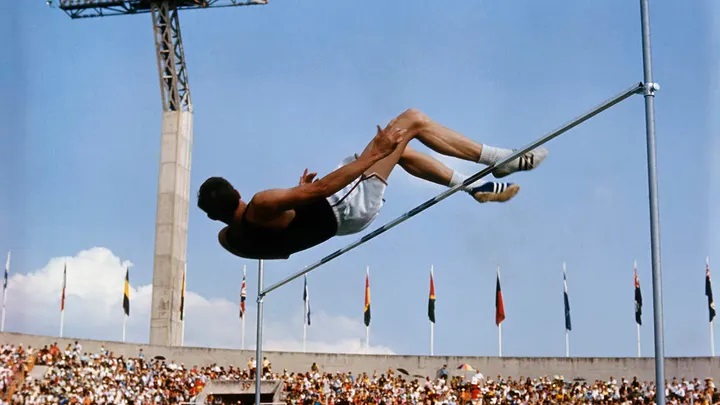
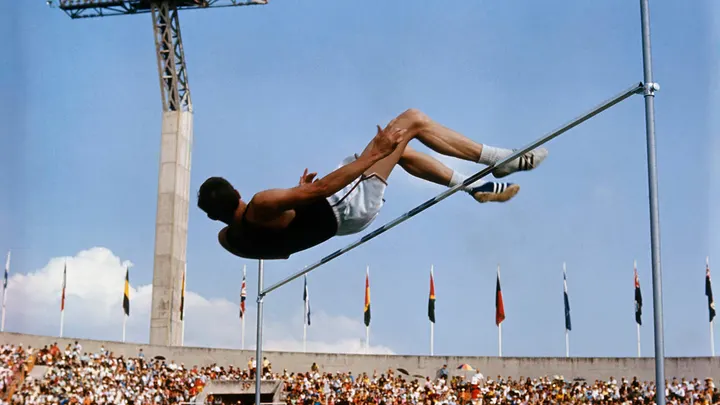
Fosbury will forever be remembered as the first gold medalist to use a new technique dubbed the “Fosbury flop”. Gliding over the bar headfirst, the technique quickly replaced the scissor-style jump with the feet going first. He did not claim to be the inventor of the new jumping style, but the Fosbury flop is how it remains known. With the encouragement of his high school coach, Fosbury began experimenting in the 1960s with a dramatically different approach to the high jump. The head first technique took a few more years to develop, but by the time of the 1968 Olympics, he was on his way to number-one in the world rankings.
The “flop” has become the only style followed by jumpers since the 1972 Olympics, the last to with a gold medalist using the now archaic scissor-style jump.
“To be honest, I wasn’t thinking of being a revolutionary,” he said in 2018 on the 50th anniversary of his Mexico City triumph.
“My intuition, my natural instinct helped me to find a better way, a new way of jumping. I happened to be the only one using it at that point. Who knew that after the gold medal in Mexico City kids around the world would adopt this technique because it looked fun,” he said.
Fosbury died March 12 in Salt Lake City where he was being treatment for lymphoma, which was first diagnosed in 2008 . He had just celebrated his 76th birthday. He lived in Bellevue Triangle in southern Idaho.
Fosbury’s survivors include his wife Robin Tomasi; sister Gail Fosbury; son Erich; stepdaughters Stephanie Thomas-Phipps and Kristin Thompson as well as grandchildren.
After he won the gold medal in 1968, Fosbury says he had to give up the high jump as a condition for readmission to Oregon State University. He blamed the time spent perfecting his jumping technique instead of school work for the academic disconnect. Upon graduation, the Oregon native would settle in southern Idaho.
Fosbury launched a civil engineering firm in Ketchum, Idaho, while staying active in Olympic circles. He was happy to coach athletes in workshops around the world. Fosbury was inducted into the U.S. Olympic Hall of Fame in 1992.
He ran unsuccessfully for a seat in the Idaho state legislature before becoming a member of the Blaine County Commission in 2019. He was elected to a second term in 2022. A Democrat, Fosbury’s seat will be filled with a Democrat to be named by the Idaho governor.
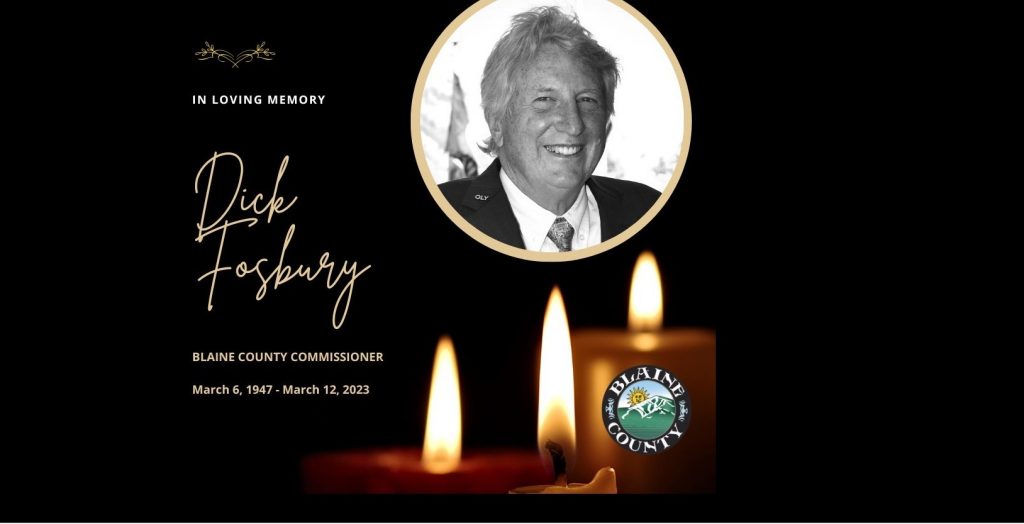
The Blaine County Facebook page mourning Dick Fosbury.
“Dick was truly a remarkable individual and I consider it an honor to have been able to have worked so closely with him for the past almost six years and witnessed first-hand his dedication and commitment to serving others,” says Blaine County Administrator Mandy Pomeroy.
“He was such an inspiration to everyone around him and my life is better off for having known him,” she says.
A black drape covered his chair and vase of flowers placed on the desk at the March 14 commission meeting. Fosbury was one of three county commissioners for Blaine County, population about 25,000.
Pomeroy described the session – packed with an array of county business – as “difficult”. She says her office is now inundated with media requests as word of Fosbury’s death spreads.
She says a memorial will be planned, perhaps in a couple of months.
Fosbury was involved for years with the U.S. Olympians and Paralympians Association as well as the World Olympians Association. From 2007 to 2011 he was president of the WOA.
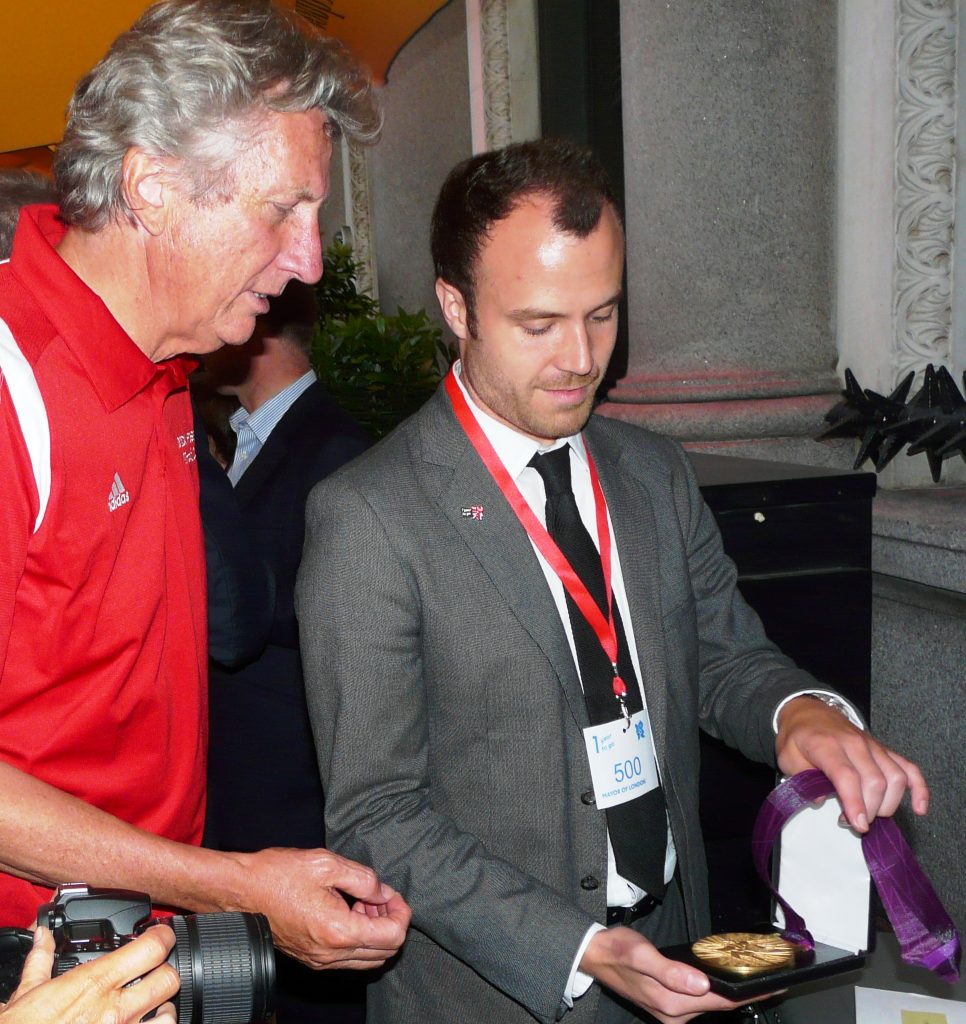
In this 2011 photo, then WOA President Dick Fosbury checks out the London 2012 gold medal.
“Dick will be sorely missed. He was a good friend to us all and a real advocate for the core values of the Olympic Movement. I was honored to work with him both at the WOA and at Peace and Sport,” says Fosbury’s successor Joel Bouzou, the current president of WOA.
Fosbury acknowledged the influence the 1968 Olympics cast upon him as he entered adulthood in the turbulent year that was 1968.
“Mexico City was a new experience for me. It changed my whole perspective when I started to observe athletes from all the different countries,” he told this reporter in 2018.
“Different languages, different races. Different food. It really was a transforming experience for me. We all have the same desires and commonalities regardless of what the politics are,” said Fosbury.
He raised his fist at the medal ceremony in solidarity with sprinters Tommie Smith and John Carlos, whose podium protest earlier in the Games triggered wild controversy in the IOC, USOC and beyond.
When he returned to the U.S. he travelled widely to talk about his experiences at the Olympics. The protests by Smith and Carlos were of interest wherever he went.
“Every cab driver would ask me about the Black Power salute and I would explain this was not about Black Power. This was about the Olympic movement for human rights. It’s not black or brown or red or yellow or white. It’s for human rights,” Fosbury said.
Fosbury tells his story in detail in a 2018 book, “The Wizard of Foz – Dick Fosbury’s One-Man High-Jump Revolution” written with Bob Welch, from Skyhorse Publishing.
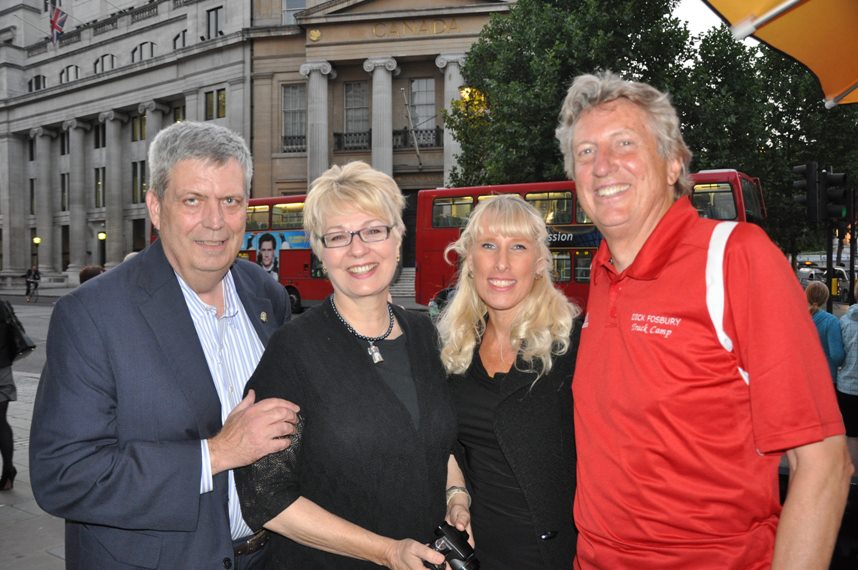
Ed and Sheila Hula with Dick Fosbury and WOA officer Tracey Mattes in London in 2011.
An optimist about the power of sport to help make the world better, Fosbury also understood the realities of life.
“The Olympics and sport represent our culture and society. And so we constantly see the improvements and great performances by the athletes and that’s very exciting. At the same time we face challenges with doping, corruption, usually influenced by money.
“So even in sport we face the same challenges we face in politics, business. It’s complex, it’s confusing. But I am a true advocate of the power of sport to be a positive influence on people,” said Fosbury in October 2018.
They are family. Some are like family. Others I pay tribute for the way they shaped my path along the never-ending road to the Olympics. On this International Women’s Day I salute the women who made this a magical journey.
The story can only be told because of the support of my wife of 38 years, Sheila. Her understanding and patience in the early days of my work covering the Olympics as a radio journalist helped lay the foundation for the decades of experiences we both would share on the Olympic beat.
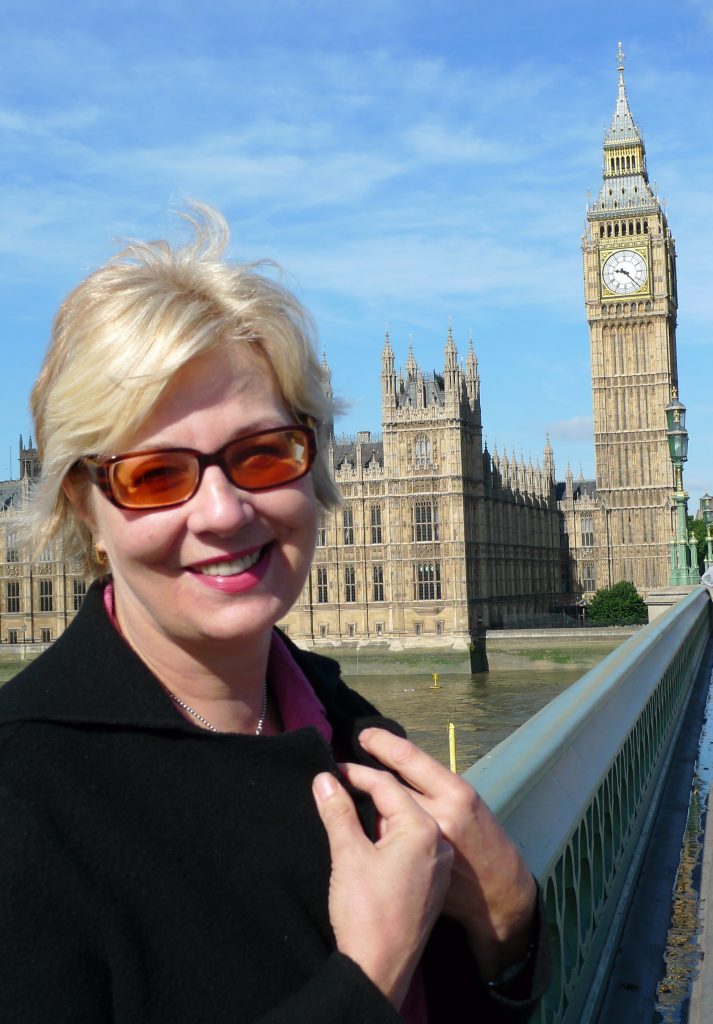
Sheila Hula in 2009.
Sheila was the publisher of Around the Rings, the newsletter we founded and then sold in 2021 to Infobae of Argentina. Sheila was her own tour de force in the Olympic world. She and I are both involved in development of our new consulting and content creation firm, Hula Sport Communications.
From the early days of my foray into the rings, I will always remember the encouragement of then IOC media chief Michele Verdier. As a novice among the ranks of an Olympic press corps deep with years of experience and contacts, Verdier helped me find a place in the media rogues gallery.
Our incredible sojourn as a family to Sydney, Australia, from 1998 to 2001 was made possible with the backing of Julie Flynn, news director for Radio 2UE, rightsholder for the 2000 Olympics and Paralympics.
Jackie Brock Doyle
Australia led to a whole new realm of acquaintances whose careers grew mightily after Sydney. Jackie Brock-Doyle was a key member of the Sydney 2000 media team. After helping London win the 2012 Games, she remained as media chief and now is a top adviser to World Athletics president Seb Coe.
Glenda Korporaal covered the business and political angles of the Sydney Games. Now she’s a senior editor for The Australian.
Nicole Jeffery, an important sports journalist in Australia for decades is now on the comms team with Brock-Doyle at WA.
Jacquelin Magnay is another Australian stalwart on the Olympics beat. After Sydney she moved to London from where she now reports.
Tracey Holmes was famously fired as a member of the comms team for Sydney 2000. But that did nothing to block her career, from a stint with CCTV in Beijing to her current work with ABC Radio (Australia).
Karen Webb also was subject to losing her job on a political whim. She departed Sydney 2000 just months before the Games. The IOC snapped her up, making her a part of its Sydney team. Since then, Webb has held posts in Doha, including work on the 2022 FIFA World Cup. She is now chair of British Swimming.
In the field of public relations, we have always welcomed the chance to work with Sevi Hubert Townsend of Jon Tibbs and Associates. Her professionalism and knowledge stand out.
The Games following Sydney were in Salt Lake City for 2002. Deseret News reporter Lisa Riley Roche was at the forefront of covering those Olympics. And now, as Salt Lake City campaigns for an encore, Roche brings to bear her experience across three decades.
Wakako Yuki, a venerable reporter for Yomiuri Shimbun, has been on the Olympic beat for 30+ years. She is the doyenne of the Japanese press corps at the Games.
From the IOC, Anita DeFrantz has been a constant in my travels on the Olympic highway. The senior member of the IOC in the U.S., DeFrantz has been a part of my Olympic coverage since we first met in 1990. Her work unsuccessfully challenging the U.S. boycott of the 1980 Olympics is a chapter of its own in the annals of the Games. She is now third in IOC seniority.
Gunilla Lindberg was elected to the IOC in 1996 and is 13th in seniority. Her unending labors as secretary general of the Association of National Olympic Committees has made her one of the most knowledgeable IOC members about the operations of NOCs.
I miss the presence of Irena Szewinska, the great sprinter from Poland, home turf for the Hula clan. I met her long after her days as a runner, when she became an IOC member. She was always kind and happy, unpretentious for her Olympic feats.
Happily unpretentious was Gianna Angelopoulos, first woman to head an Olympic organizing committee. Always accessible to the press, she sought the attention that helped get Athens to finish line.
Laura Walden was on the scene in Europe for almost 20 years. The Texan was part of the pr team for the European Olympic Committees before launching her on line publication Sport Features and working on Olympic bids from Pyeongchang.
Atlanta-based reporter Karen Rosen is among the “almost family” I can thank for the contributions she has made to Olympic journalism through the years. As a colleague her know-how is voluminous. So is her collection of memorabilia. We will hear more from her in years to come.
Kathy Kuczka and Janice McDonald have been members of our Olympics family for numerous editions. They helped make it all possible. My first intern Melissa Gray is now a senior editor for CNN. My sister Liz will always be remembered for dishing out the bagels at our first Newsmaker Breakfasts held during the ‘96 Games.
Last, thanks to Mom, who was number-one for influencing my life for many years. We lost her in 1994, just weeks after thrilling her when she heard me report from Lillehammer. It was the first time she heard my voice on the radio from overseas. I often think about that today when I have a microphone in front of me. Thanks for the cheers, Elsie Hula.
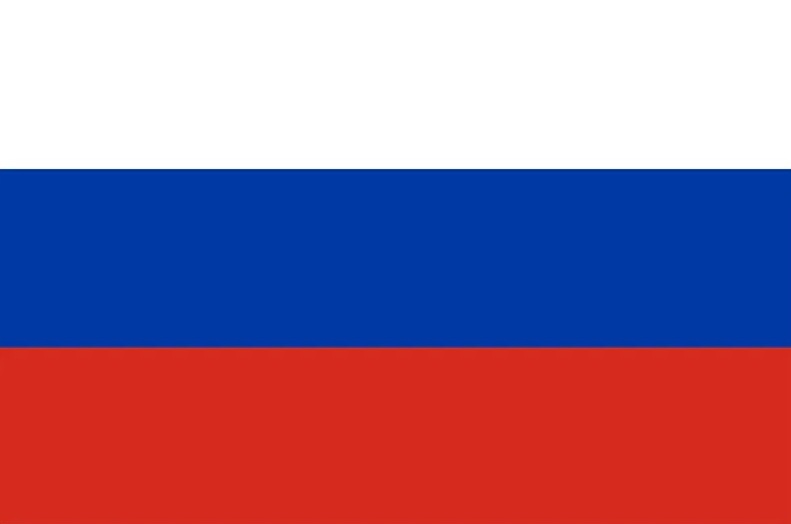
The flag of Russia may never again wave over an Olympic Games.
It’s already been six years since the Russian flag was banned at the 2016 games in Rio De Janeiro over a massive state-run doping scheme involving Russian winter and summer sport athletes.
Now the prospect of a longer-term rupture appears to grow as the Russian attack against Ukraine persists into a second year. Paris 2024 will likely be the third consecutive Summer Games without a recognized team from Russia: no flag, and no anthems for gold medalists. Athletes from Russia may compete as neutrals, though how they will be chosen is still not known.
Even if the Russian offensive ended overnight, would there be time enough for Moscow to make amends? Probably not. The quest for accountability from Ukraine and its allies will put demands on Russia that will take decades to satisfy.
Calculating the scale and cost of reparations could be the most complicated number-crunching of the 21st Century. Trillions are likely needed. Charges of war crimes and subsequent trials, like rebuilding, will go on for years as well, ongoing reminders of the agonies suffered.
Of the many casualties of the unprovoked war, the Olympics are on this grim list.
In February, ministers from 30 European nations signaled to the IOC that some of them could sit out Paris 2024 rather than make concessions about Russian participation. Ukraine President Volodymyr Zelenskyy leads the way in rejecting IOC attempts to include any Russians in the upcoming Games. Ukraine will stay home from Paris, he warns.
The IOC and President Thomas Bach will need all the sports diplomacy they can muster over the next year. Keeping a lid on boycott threats by governments, athletes or sports federations will be the IOC’s big worry. A lot will depend on the state of play next February, especially if the shooting persists.
Look for the U.S. to be a hotspot if members of Congress rebuff IOC decisions regarding Russia, pressing the U.S. Olympic and Paralympic Committee to join Ukraine in a possible boycott.
Imagine the chaos should Russian allies also threaten their own boycott to show solidarity with the Kremlin.
Another key test for the IOC comes late this year when the U.N. would customarily endorse an Olympic Truce to be observed during the time of the 2024 Games. Noble as it is, the notion of an Olympic Truce has been made laughable by Russia as well. As the Beijing Winter Olympics came to an end last year, Russia — one of 190 member nations to back the Olympic Truce — launched its latest invasion of Ukraine.
That makes Russia a habitual Olympic Truce violator, if there can be such a thing. At the end of the 2014 Winter Olympics, Russian President Vladimir Putin shamelessly unleashed his forces to seize the Crimean Peninsula from Ukraine. So far there’s no word yet from IOC headquarters in Lausanne of any alternate strategy to deploy in the cause of the Olympic Truce. It is customarily advanced by the host nation of the upcoming Games, in this case France.
That in itself is reassuring for those who value the symbolism of the diplomatic gesture. French President Emmanuel Macron is at the tip of Europe’s resistance to the Russian onslaught. He would be an enthusiastic campaigner for the truce. At the same time, he is one for whom the irony of Russia’s repeat disregard of the truce will not be lost.
Whether Putin has the nerve to instruct his diplomats to add Russia as a signatory to a 2024 Olympic Truce remains to be seen.
As evidenced by 2014 and 2022, how surprising would it be for Putin to endorse a cease fire during the Paris Olympics? As he did back then, what plans will Putin hide behind the curtain of Russian support for a truce?
Fool me once, shame on you. Fool me twice, shame on me.
Fool me three times?
Macron and other voices such as the IOC president will have to answer that question when the General Assembly convenes in September.
This grim scenario doesn’t bode well for Russia’s place in the Paris Olympics or any other. Italy follows with Winter Games in 2026, likely with Russia still in the sin bin regardless. Then there’s Los Angeles in 2028, where the absence of Russia seems predestined by history.
The last time LA hosted the Olympics in 1984, 13 Eastern bloc nations joined what was then the USSR in a boycott in retaliation for the US-led boycott of the 1980 Moscow Olympics. If the parade of athletes at SoFi Stadium in 2028 is minus Russia, the games will be the fourth Summer Games without an official delegation from Russia.
Whether from a boycott or continued IOC sanctions, Russia’s Olympic exile, like the war it has wrought in Ukraine, appears to have no end. An end in Russia’s favor with a subjugated Ukraine will certainly be greeted with dismay around the world. Reaction from the IOC could bring a permanent ban for the Russian Federation from the celebration of peace and sport. Understandably frustrated, the IOC will leave reconciliation to future generations.
Gary Fenton will be known as a broadcaster who brought coverage of the Olympics to new generations in Australia.
His career as an executive in sports TV covered the gamut, from cricket to Aussie rules football, but Fenton’s work on the Olympics will be remembered above all.
When he retired in 2012, Fenton had been involved in coverage of the Olympics for Australia TV beginning with the 1976 Games in Montreal.
Gary Fenton was 76 when he died January 31 in Sydney. Fenton had been treated for prostate cancer over the past 13 years. He is survived by his wife Marie and three adult children.
At a date to be determined, a celebration of Fenton’s life will be organized. Always quick with a quip or keen on irony, Fenton’s humor was a constant. Even in his last days he is said to have kept his spirits up with visits from an old friend.
Gary Fenton in 2010 at the Youth Olympic Games.
Fenton was the head of sport for Seven Network in 1994 when he was tapped to lead the Sydney Olympic Broadcast Organization, SOBO as it was known by acronym. Charged with delivering the host broadcasting signal to the world’s rights holding media, Fenton also knew that the 2000 Olympics would be an enduring event in the history of Australia. The product delivered by him and his team had to be right.
The 2000 Olympics produced the moments that made it so. Cathy Freeman’s gold medal on the track, Ian Thorpe conquering the pool, Fenton watched over these Games like none other before. He was intent on delivering the best. He was awarded the Golden Rings, an IOC prize for Olympic TV presented after every Games.
Post Sydney, Fenton joined the Nine Network in 2006 as head of sport. He helped secure the network rights to the 2010 Winter Olympics and 2012 Games in London, his final as an executive. Last month, Nine reacquired the rights to the Olympics, running from 2024 in Paris to Brisbane in 2032. The record-setting package is valued at $350 million. Decades earlier, Fenton was an advocate for Seven to bid for multiple Games, establishing the model that led to the Nine’s latest deal for Australian rights.
Fenton’s death follows just a month after that of his colleague Manolo Romero, former head of host broadcasting for the Olympics from 1992 to 2012.
Although a Sydneysider for many years, Fenton was born in Melbourne. The Victoria capital is also the home of Australian Rules Football, which Fenton followed with a passion throughout his life. He assembled an extraordinary collection of Aussie Rules memorabilia as well as Olympic objects. His collection of Olympic torches is said to be one of the best in Australia.
Phil Coles can be remembered for his battle against the 1980 boycott of Moscow, Or as a souce of scandal on the eve of the Sydney Olympics.
Former IOC member Phil Coles was 91 when he died January 29 in Sydney after what’s reported as a short illness. His IOC tenure ran from 1982 to 2011, during which he played a key role in Australian Olympic bids from Brisbane for 1992 and Sydney, successful in 1993 for the 2000 Games. Coles was one of two Australian IOC members at the time. His senior was Kevan Gosper, a Melburnian who joined the IOC in 1977 and retired a decade ago.
By profession Coles was a plumber. But canoeing was his passion in sport. He was 29 when he competed at the Rome Olympics. In 1964 he captained the Australian team for Tokyo and ended his Olympic career at the 1968 Games in Mexico City.
Coles became involved with the administration of the sport in Australia and joined the staff of the Australian Olympic Federation, now the AOC. He worked alongside chairman David McKenzie, a charismatic leader who had been an IOC member since 1977. Coles would recall how he would take McKenzie to and from the airport with McKenzie reccounting the highlights of the trip during the journey.
McKenzie did not return after one such trip in 1981. He was found dead in a spa in Hawaii, age 45. While the circumstances were mysterious and suspicious, no criminal charges emerged. Coles was part of the delegation that flew to Hawaii for the repatriation.
Newly elected IOC President Juan Antonio Samaranch had asked Australian officials to consider candidates who could succeed McKenzie. Samaranch is said to have explained that he would like to interview the proposed candidates when he makes a stop in Australia in the future. Historian Harry Gordon recalls that Samaranch was informed that of three candidates only one needed to be interviewed, should he wish to bother. Kevan Gosper told the IOC leader Phil Coles was the choice for Australia. Coles was elected at the 1982 Session in Rome.
Phil Coles in 2004.
Coles became ensnared in the Salt Lake City Olympic bid scandal that erupted in late 1998. He was found to have accepted luxury ski accomodations in Utah during the Salt Lake City bid for the 2002 Winter Games. He was suspended from IOC voting and commission assignments for two years, one of 24 members to face ethics charges over the scandal.
The IOC penalties in 1999 also forced Coles to give up his seat on the board of the Sydney Olympics, just as the home stretch to the Games arrived. He was given perfuntory attention, a cold shoulder for the Olympics he helped secure for his home town. He was subject to searing headlines, bad press.
Coles could be bitter about the experience years later at the same time sanguine.
“There’s nothing more to say,” is how Coles had put it to this reporter.
Coles is survived by spouse Patricia. The lived in Bondi, the Sydney suburb famed for its beach. Coles swam frequently. After caneoing, Coles took up surf lifesaving at Bondi. He was a booster of the sport to join the Olympic program. Coles also lent his support to triathlon
Phil Coles is also remembered in Australia for leading the effort to reject a boycott of the 1980 Olympics in Moscow. Coles led the Australian team into the opening ceremony. IOC President Thomas Bach said this week that Coles’ stand against the boycott was a singular achievment.
“It made him proud for the rest of his life to have led these athletes into the Olympic Stadium.
“His love for the Olympic Games was at the centre of his life,” said Bach.
“Personally, I have lost a wonderful friend with whom I shared so many moments of our Olympic lives.
“I will never forget this heartwarming friendliness and his sense of humour,” says Bach in a statement.
Australian Olympic Committee president Ian Chesterman decribed Coles contribution to Australian sport as “immense”.
“Phil’s passing, after a lifetime in sport, is a sad day for the Olympic movement and for many involved in the wider sports community in Australia,” Chesterman said.
Manolo Romero changed the Olympics. As much as one person can influence a juggernaut such as the Olympics, the Spanish genius of television made possible the extraordinary visual experience that the Games are today.
Romero died Christmas Eve 2022 in Segovia, near Madrid. Cancer the cause. He was 81. Family was with him, wife and daughter, both named Ursula.
Fresh out of the University of Madrid, he started working with Spanish TV network RTE in 1965. His first Olympics was Mexico City in 1968 and he would continue an unbroken string of Summer and Winter Olympics through 2012.
He saw firsts for Olympic TV. Instant replay. Digital cameras. Live coverage of every event. Streaming. HD TV. Close ups and camera angles never seen before.
In a 1991 interview with this writer in Barcelona, Romero said the Olympics are now expected to drive the future of sports broadcasting.
He noted the first ever commentator information system being readied for the rights holding broadcasters in Barcelona. Touch screen access to the IBM powered network would provide instant recall of results and athletes to live commentators.
“I’m very proud of this. This is a new generation of information. I think it is a breakthrough,” said Romero. He was right. The CIS is as integral to the host broadcast signal as audio and video. Limited in Barcelona, the CIS of today delivers a torrent of real time Games data to broadcasters.
The Los Angeles 1984 Games were the first where he was leader of the whole host broadcast operation. The natural choice for the same in Barcelona for 1992, Atlanta dovetailed Romero to pilot host broadcasting for 1996.
At the time, the host broadcaster was a task organized and funded by the organizing committee, leading each new Olympic city needing to assemble the resources to cover every session of every sport.
Watching this never-ending replay of technology and economic challenges, Romero became a key advocate of an IOC takeover of host broadcasting. Instead of a new team for each Olympics, Romero proposed a permanent cadre of experienced professionals. With IOC backing, he formed International Sports Broadcasting to do just that.
Romero at the Salt Lake Ciry Olympics in 2002.
In 2001, the IOC contracted with Romero’s ISB to deliver turnkey broadcast services through 2012. After London, a wholly-owned IOC company took over, Olympic Broadcasting Services. OBS remained based in Madrid, now led by Romero protégé Yiannis Exarchos.
To call the voluble Greek a protégé of Romero might be an understatement. Exarchos came to host broadcasting from years of experience in sports TV for ERT in Greece. The coming of the Olympics to Athens made him Romero’s choice to help lead the host broadcast team.
“His mentorship and leadership were instrumental in my life and his wisdom and work ethic transcended our work together. The legacy of his guidance still resonates with me every single day of my professional life. Words can’t begin to express how much I will miss him. There was no greater champion of the Olympic movement, nor anyone whose impact was greater on the world being able to come together and unite through the power of sport,” said Exarchos last month.
Hank Levine, who served as ISB CEO for 10+ years described how Romero influenced his career.
“As you know, he was a transformational person and an icon in the world of sports broadcasting who became larger than life and we all must celebrate him. All of us who have been around him have benefited from his contributions and his demanding nature for excellence.
“We all know that Manolo had an infectious amount of energy which was matched by his brilliance that has forever changed the sports broadcasting world! We have lost a driving force in our professional and personal lives but his legacy will carry on because his legacy is so impactful, so strong and so positive. I was one of the fortunate people to witness his brilliance and passion firsthand and I will always be grateful for this time and the opportunity,” Levine wrote in the days after Romero’s death Dec. 25.
While Romero retired from Olympic duty in 2012, he remained active in sport broadcasting. ISB, the firm he founded in the 1990s, took over the host broadcasting for the 2015 European Games in Baku.
The company also handled the host broadcast of the 2022 World Games in Birmingham, Alabama. Although Manolo Romero was involved in all of these projects, daughter Ursula has worked with him through these years as the ultimate protégé. She now leads ISB as its managing director.
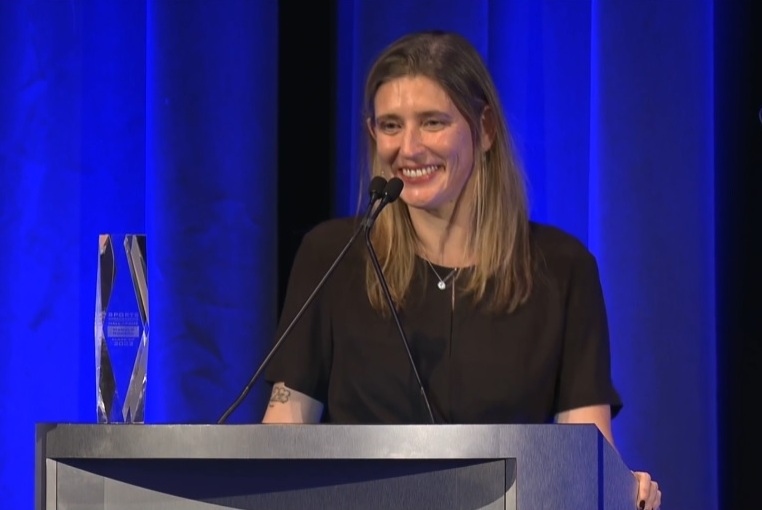
Manolo Romero was inducted into the Sports Broadcasting Hall of Fame in 2022. Unable to travel, Ursula accepted on his behalf at the New York ceremony. She called him “the most incredible father anyone could have wished for”.
Ursula Romero at the Sports Broadcasting Hall of Fame induction for her father.
Tributes from colleagues are many. OBS compiled a number of them, some excerpted for this article.
“Manolo was a legend and a pioneer in the sports broadcasting industry. His legacy on Games coverage will live on not only in the cutting-edge techniques and innovations he introduced to broadcasting, but also through the thousands of broadcast professionals he mentored and influenced over the course of his more than 50 years of career in the sector,” said IOC President Thomas Bach in a statement from Lausanne.
Manolo, rest in peace, amigo,” writes Gerardo Werthein, IOC member in Argentina and chair of OBS.
“A pioneer and iconic figure within the broadcast industry, where his vast experience and career spanned several decades, Manolo’s vision and remarkable leadership helped in getting us where we are today,” says Werthein.
Fellow Spaniard Juan Antonio Samaranch is an IOC vp and chair of OBS Spain:
“It has been so sudden that it will take us all to realize the great space that you have always occupied for so many people, inside and outside the Olympic world.…
“Those of us who have had the privilege of knowing you, personally or professionally, have learned a lot, both from your ingenuity in creating new ways of working and producing large and complex events, and from your ability and willingness to educate generations of professionals who, today they are still the best at what they do.
“Your Ursulas, wife and daughter, generously shared you with the entire Olympic Movement and have even followed in your footsteps with great success. They will carry on your legacy.
“Now we have to move on, always keeping in mind what we learned from you. The best acknowledgment we can give you at this time of saying goodbye is to work hard and honor your memory. So we’ll only be showing the ads on the website on the dates specified? Want to make sure we put this in the system correctly as it takes some time to setup and would like to do it correctly the first time.
So we’ll only be showing the ads on the website on the dates specified? Want to make sure we put this in the system correctly as it takes some time to setup and would like to do it correctly the first time. “We miss you already, dear Manolo. What a great feeling of emptiness!”
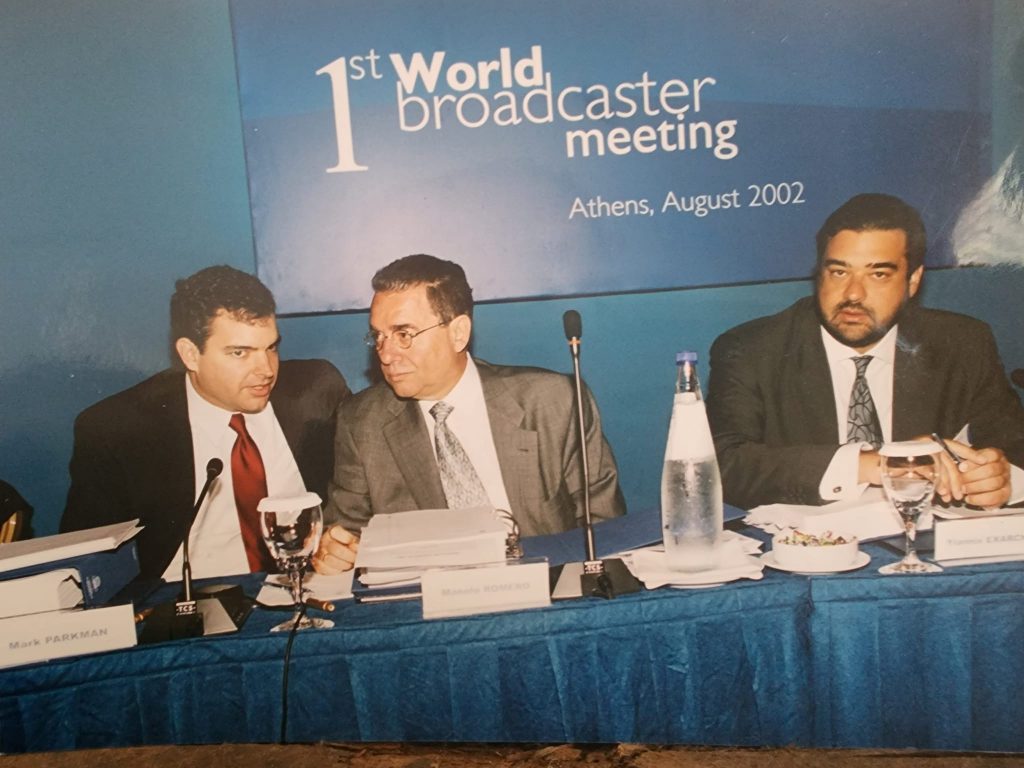
Manolo Romero with Mark Parkman and Yiannis Exarchos.
Mark Parkman stepped down in 2022 from his long career at the side of Romero and then leading OBS and the Olympic Channel:
“How many people have the honor of being able to work along side a worldwide legend? I was a lucky and fortunate person. Manolo was my professional Father and the impact that he had on me is greater than words can describe. There will never be another person who brought so much passion and excellence to his mission than Manolo. His recent induction into the Sports Broadcasting Hall of Fame allowed us to reflect upon his greatness and to realize that we were even luckier to have worked by his side.”
Gary Zenkel of NBC is one whose Olympic career across two decades was also shaped by Romero’s work:
“Manolo was a true trailblazer who set a global standard for sports broadcasting matched only by the importance of the event he documented for close to thirty years. In addition to his uncanny ability to organize and deliver the incredibly complex Olympic host broadcast, he was an extraordinary partner and friend to NBC and the rights holding broadcasters. His influence on sports broadcasting continued to be felt after his retirement and will endure for decades to come. We are all grateful beneficiaries of his prodigious talents and of his friendship.”
Zenkel is President of NBC Olympics and Business for the NBC Sports Group.
Fernando Pardo worked with Romero in Spanish TV and with the EBU Olympics team for his entire professional career.
“In all these years we were not, in all the occasions, in agreement, as our professional points of view were sometimes different, but these differences never marred our personal relations.
“Manolo was a genius and the spearhead in organizing and making possible the most difficult tasks in the covering of big sporting events. He created great teams that were able to bring the sports TV´s coverage to state of the art pieces. He was also the broadcaster who, from Barcelona 1992 onward, brought TV sports production to the quality and grandeur that nowadays is considered “normal.” Only few people know how many years of effort, professional skills, leadership and hard, hard work, have gone into implementing it. Manolo was the number ONE. I personally think that with his loss, an era of great broadcasters is gone. Descanse en paz.”
Vili Nedialkova is another lifelong colleague of Romero as leader of the broadcast team from German ARD/ZDF:
“Manolo accompanied me during almost all my professional life, since 1978. He was my mentor, my idol, I learned so much from him – complexity and flexibility, deep knowledge in all fields of broadcasting, integration of teams from all over the world, different nationalities, languages, cultures and religions to fulfill ONE common goal – excellent and innovative broadcasting!!!!! His work and personality will not be forgotten. With my IOC Golden Rings and SVG Europe awards I am giving something back to him and many people will follow his legacy in the future.”
Dave Gordon of the BBC worked with Romero since 1992:”Manolo was not only the real pioneer and the great innovator behind the development of Olympic broadcasting coverage but also a great friend and enabler to rights holding broadcasters such as the BBC. He always shared our ambitions and was tireless in working with us to deliver great programmes for our audiences. His collaborative and inspirational approach encouraged us to use the latest technologies and OBS under his leadership became a powerhouse to meet all our needs and ensured we were in safe hands.
“All of us at BBC Sport, and myself in particular as team leader, will never forget his friendship, help and support as our plans for the 2012 Olympics took shape from the moment London was awarded the Games in 2005 through to the Closing Ceremony in 2012. He worked alongside us, helping us to overcome any problems or issues. As a result, we were able to achieve a level and standard of Olympic sports programming in the UK that had not been seen before. He deserves a significant portion of the many plaudits the BBC received.”
Climate change is the new reality for the IOC and the Olympic Winter Games.
The decision by the IOC Executive Board to postpone a decision on the 2030 Winter Games from 2023 to the next year is the first significant step the IOC is taking to dodge the trouble of finding hosts for the event as winters continue to warm.
Sometime next year the IOC is expecting to receive the findings of a report commissioned in the December meeting of the EB.
Still needing more detail on scope and process, the report is supposed to address the fundamental challenge of finding suitable hosts that deliver sustainable Games with weather that’s cold enough for outdoor events.
IOC Olympic Games Executive Director Christophe Dubi indicated that the use of existing facilities will be a key requirement. It’s tacit recognition that there is little appetite anywhere in the world these days for massive construction projects in support of a Winter Olympics.
And neither does the IOC want controversy over deforestation, so existing ski runs are another must to meet sustainability requirements.
Layer that with reliable cold weather and snow, the roster of countries that can deliver today are but a handful, all a result of hosting previous Games. From North America there’s the U.S. and Canada. Japan and China are plug and play ready from Asia.
Europe has the biggest contingent: Austria, France, Germany, Italy, Norway, Russia and Switzerland
That’s 11 countries in all. With Sapporo and Salt Lake City believed to have the inside track for 2030 and 2034, the IOC hopes those two experienced hosts will provide a smooth start to the still to be new rotation for the Winter Games defined rotation. Indeed, still to be confirmed is whether to make a joint award for 2030 and 2034. IOC President Thomas Bach who a few months ago said the selection of the 2034 Winter Games host should be handled by his successor, appears to have adjusted his thinking now in favor of the twin awarding.
But where to go from there? If the next three Winter Games go to Europe, Asia and North America in that order, then Europe would seemingly be the next in line for 2038. With the largest number of possible sites, the IOC surely should be able to find a European host to keep the rotation in motion.
Politics have laid waste to a litany of bids from Europe in the 21 st century, largely over fears of financial risk. A reset of how the Winter Games are chosen and delivered may be the right button for the IOC to push in its chronicle struggles against Olympic-phobia. Not just in Europe, but everywhere.
Bach’s forward thinking Olympic Agenda 2020+5 program is meant to be a reset of all aspects of the IOC’s work as it closes the first quarter of this new century. It’s a why not approach that opens the door to consider drastic changes such as those needed for the Winter Games.
The IOC has yet to identify the composition of the team which will produce the report. IOC member Octavian Moriaru is expected to play a big role as chair of the Future Winter Games commission. Federations and NOCs will want their say on how an orderly rotation of Winter Olympic hosts might work.
Sponsors and broadcasters would want to know more, too. Plugging scientific expertise into the report will also be critical.
While optimists will look to the future and see a second century of Winter Olympics glory ahead, the experts may not be as upbeat. The battle against global warming is far from being won. The IOC report next year may become another wake upcall to the world about the consequences ahead from climate change
As the new year launches, so too the new venture led by Sheila and Ed Hula. Both known worldwide for the creation of Olympic news source Around the Rings, Hula Sport Communications is the name of their latest enterprise. Formed in 2022 following the sale of Around the Rings to new owners.
HSC is a boutique agency which creates content for sports organizations and events worldwide.
We invite inquiries on how our team can help raise your profile with effective and compelling communications.